
Highlighting the contribution of ocean key sectors to the GBF
Adopted in 2022, the Kunming–Montreal Global Biodiversity Framework sets out 23 targets to be achieved by 2030. Delivering on these ambitions requires action not only through conservation policies, but also across the economic sectors that depend on and affect biodiversity.
The Ocean Breakthroughs provide a sector-based framework to accelerate these efforts across five key sectors: Marine Conservation, Aquatic Food, Ocean Renewable Energy, Maritime Transport and Coastal Tourism.
By connecting sector-specific ambitions with relevant GBF targets, the report demonstrates how these key ocean sectors can support biodiversity action through ecosystem protection and restoration, sustainable resource management, climate mitigation, responsible investment and the integration of biodiversity into economic decision-making.
It also identifies important gaps in available data, which will be addressed through further development of the Ocean Breakthroughs Dashboard.
Encouraging progress, but significant gaps remain
The report reveals growing momentum across the three sectors, driven by increasing political commitments, investment and recognition of the need to align action and finance flows with climate and biodiversity objectives.
However, its findings point to a common challenge: progress in commitments and sectoral activities is not yet consistently translating into demonstrable benefits for marine and coastal biodiversity.
Several key findings illustrate this gap:
- Marine Conservation: Marine protected areas now cover more than 10% of the ocean, but only 3.1% is fully or highly protected, highlighting the need to move beyond expanding coverage towards effective conservation and restoration.
- Aquatic Food: Demand for certified sustainable seafood is growing and international commitments to combat illegal fishing are strengthening. Yet only 62.4% of assessed marine fish stocks were within biologically sustainable levels in 2023, underscoring the need for more sustainable fisheries and aquaculture practices.
- Ocean Renewable Energy: Global offshore wind capacity reached 92 GW in 2025, demonstrating growing momentum in the energy transition. Nevertheless, significant investment gaps remain, while limited data on biodiversity safeguards and community engagement make it difficult to assess the sector's wider environmental and social outcomes.
Together, these findings highlight the importance of accelerating sectoral transformation while ensuring that progress delivers tangible benefits for nature, climate and people.
From ambition to measurable outcomes
Beyond sector-specific findings, the report identifies three priorities for accelerating progress towards 2030.
- First, strengthening implementation to ensure that policies, commitments and sectoral practices effectively reduce pressures on biodiversity.
- Second, scaling up and better aligning finance with biodiversity objectives, while improving the transparency and traceability of investments.
- Third, closing data and monitoring gaps to better assess ecological outcomes, measure the effectiveness of interventions and strengthen accountability.
These priorities are particularly timely as Parties to the Convention on Biological Diversity undertake the first Global Review of collective progress towards the GBF. Their urgency is further underscored by the Secretariat of the Convention on Biological Diversity’s State of Biodiversity Action report, which warns that “unless collective implementation accelerates rapidly, the 2030 targets and mission will not be achieved”.
By providing an initial evidence base on the contribution of key ocean sectors, the report seeks to inform this process and reinforce the importance of integrating ocean-based solutions into national biodiversity and climate strategies.
LOOKING TOWARDS 2030
With four years remaining until 2030, the report sends a clear message: accelerating ocean action is essential, but the scale of commitments alone will not determine success.
The coming years must see a stronger focus on implementation, effective investment and measurable outcomes to ensure that sectoral transformation contributes to healthier marine ecosystems, more resilient communities and a sustainable ocean economy.
Explore the full report by clicking below
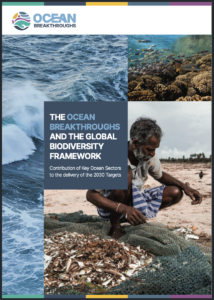
The report was developed by the Ocean & Climate Platform, building ont the findings of its collaboration with the World Resources Institute (WRI) and with the support of the Ocean Resilience and Climate Alliance (ORCA).
Suggested citation: Ocean & Climate Platform (2026). The Ocean Breakthroughs and the Global Biodiversity Framework: Contribution of Key Ocean Sectors to the Delivery of the 2030 Targets. 20 pp.
