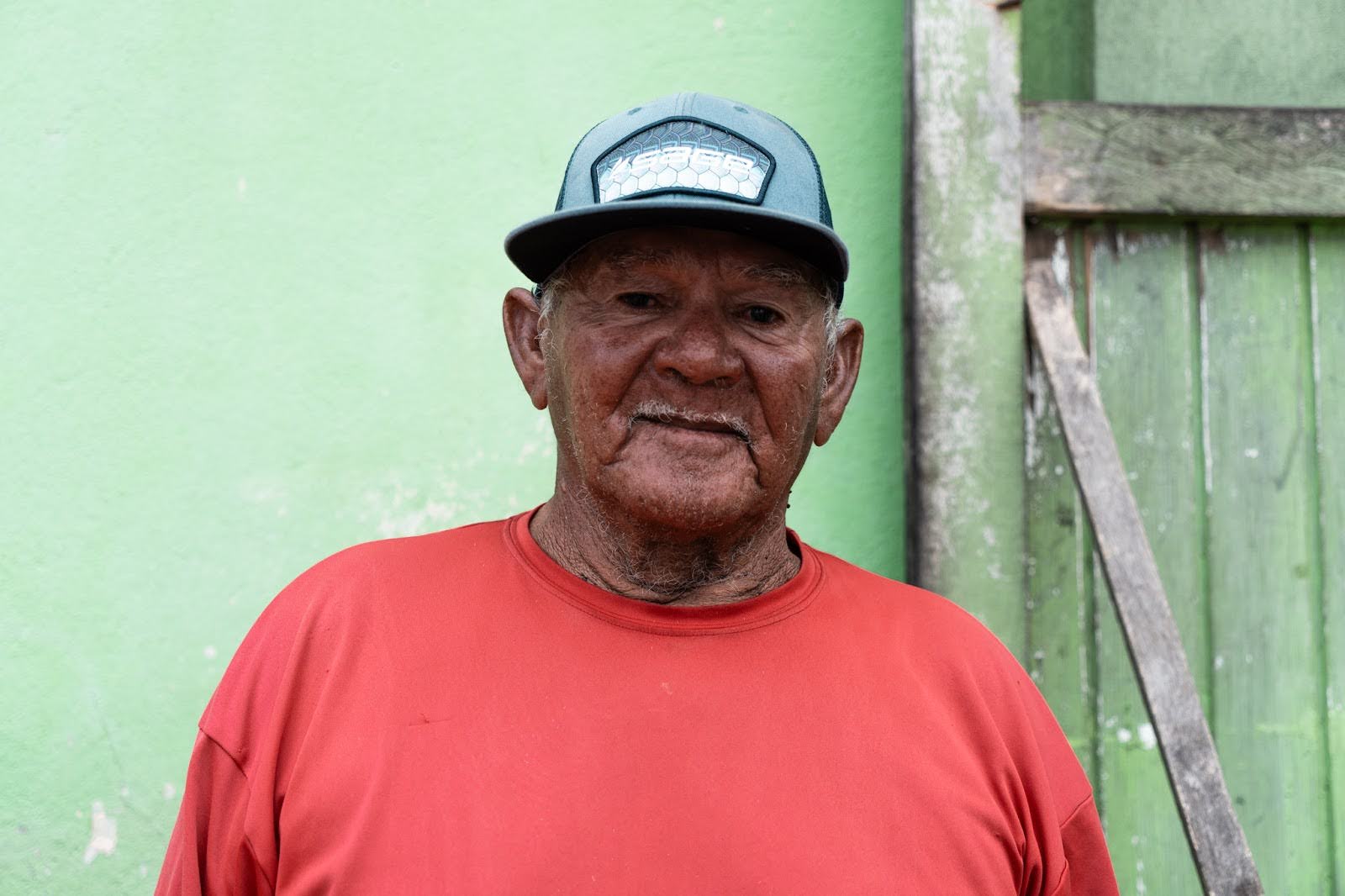
FLY FISHING IN BELIZE
It was actually my younger brother, David—he’s the one who started it all. I was in the British Army when I was twenty years old and when I came back home to Belize in 1967, he was the number one fly fishing guide in this country. I had been a cook in the army so that is what I did when I started to work in Belize again at some of the tourism lodges. One day, the fly fishing guide didn’t turn up and the rest was history!
I was born on a sailboat in Belize, so you can say that I’ve been close to the ocean from the very start. But I didn’t start out fishing for permit, as that didn’t become popular until the 80s. I started out as a scuba diving guide, and spin casting for fish. But when I started permit fishing, I fell in love. Permit fish, if you haven’t heard of them, are hard fish to catch. They are prized fish here in Belize because they put up a fight and have different behavior to other fish when trying to catch them with an artificial fly. They pick up the fly, they suck, they inhale, and they spit it back out.
The sport of fly fishing is typically catch and release. But you have to do this correctly or the fish you catch might die even after you release them. So, this is a highly skilled craft—it’s almost like an art form—with a very big cast. That’s why I decided to build my own lodge with my present wife, Pearline, and dedicate my life to the sport. When I met her, she was actually a commercial fisherwoman on a sailboat. And then she came to Manta Reef Lodge to take on the role of a chef, where I was working after the army as well. We had a lot in common. One night, after about three months of getting to know each other, we got to talking and she said let’s build something ourselves. The next day, she told me that she leased three acres of an island. That was the beginning of Blue Horizon. We named it eight years before we even built the place!
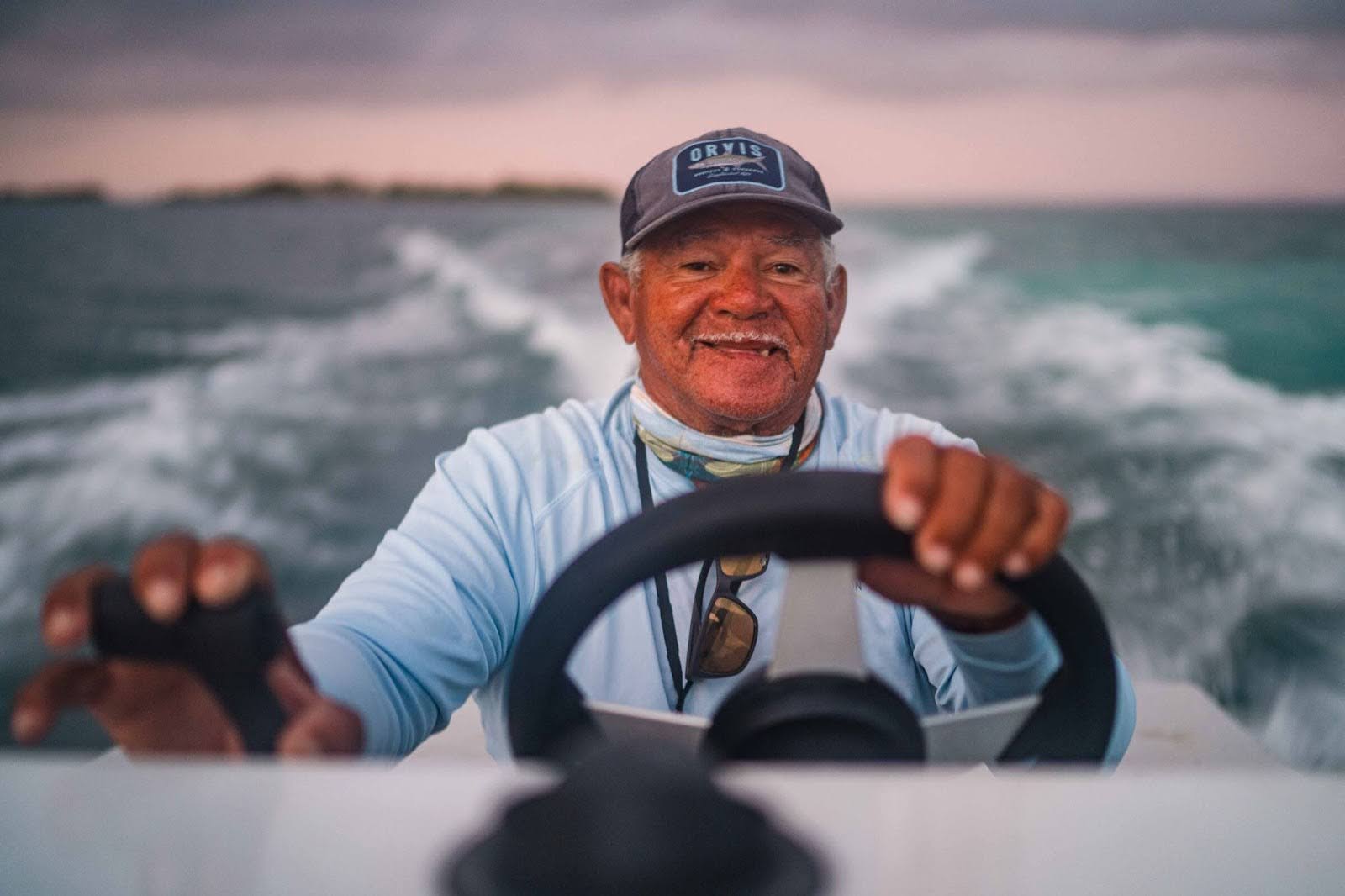
(Lincoln out on the water. Photo Credit: Blue Horizon Lodge)
In January of 1997, we opened Blue Horizon officially and my wife and I worked at that business until 2014. The lodge was known for fly fishing. Today, we no longer own Blue Horizon, but I work there as the head fly fishing guide. People are coming from all over the world to go fly fishing for permits with me, and I guess I’m somewhat of a known figure here. People even ask me for my autograph from time to time!
When I was growing up, I didn’t go to school. I started helping my family as a fisherman before going into the army. My father was a lighthouse keeper, and when he needed to retire early, I wanted to help bring funds home to my family. I had a nice family—my mother and father were really kind. But I truly learned about work ethic and how to commit to something while in the army. It was what helped steer me on the right path. This is something that I share with younger people today, the importance of a good work ethic and finding one’s own path.
Today, I’m educating and training the younger people here in Belize—as many as I can. I don’t charge them a penny for my training. I just give them what I know, help put them on a straight path just as much as becoming a great fly fisher. I've done this for about eighteen to twenty young men already and every one of them are doing well as sustainability-focused guides. And that's what I want to do until my days are done.
So, you might be wondering by now, how did I become such an elite level fly fisherman? What does this even mean? Well, reaching this level is all about the type of fish we go after. Every fly fisherman in their life, if they are serious, wants to try and catch the permit fish! Belize just so happens to be one of the best flat fishing places in the world for this very kind. You go out to these little reefs, tucked in the larger barrier reef, and that’s where you’ll find them. When you hook one and you catch a permit, you’re on top of the world!
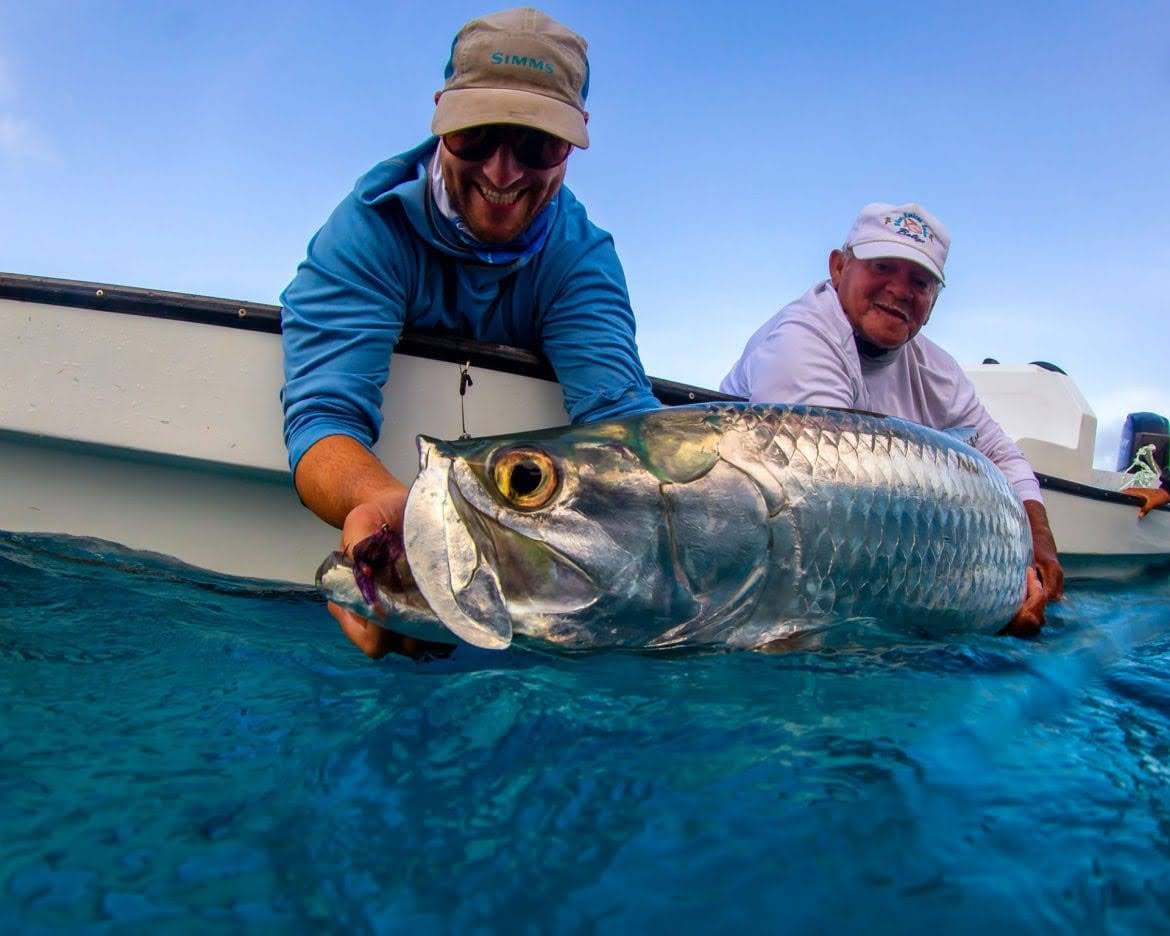
(Lincoln catching Tarpon. Photo Credit: Blue Horizon Lodge)
Sport fishing, including catch and release, here in Belize is a huge tourism contributor. When the last assessment was done, it was said sport fishing created 2,000 full time jobs in Belize. I got so interested in this and rose to the challenge of becoming one of the best. And it’s all because I fell in love with studying the process, studying the fish and getting around these flats.
BELIZE’S CHANGING OCEAN AND BARRIER REEF
I’ve called this place my home my entire life, except for the six years I was in the army and then five years when I lived in Bermuda. And a lot of significant changes have happened in this ocean between my childhood and now. For example, natural disasters like hurricanes have increased. There also was the coral disease that wiped out so much of our reefs in 2019 and 2020. Not to mention, we catch so much of the Caribbean garbage—from plastics coming in from Belize City to huge trees coming from Honduras!
When you see a lot of trash, it's because we get these big high tides. The mangroves that protect our beautiful coastlines and our renowned coral reefs will collect with garbage. When the tides lower, it all goes back into the cayes that are all around Belize’s coastline. Trash gets stuck EVERYWHERE. As guides, we will pick up as much as we can while out fishing, and the community is committed to helping too, but there’s just so much. And these are just a few examples of the changes I’ve seen.
If I had to guess, I'd say about 20 to 25 percent of the reef is damaged compared to when I was young. I can tell because, when I was growing up, I didn’t even have to go far out on the reef to catch fish or conch. There was so much here right at the shoreline. Today, you have to go far out. You have to search for it. I could pick up all the conches I wanted along the beach. I could just walk out off the island and get lobsters. Today, all of that is gone.
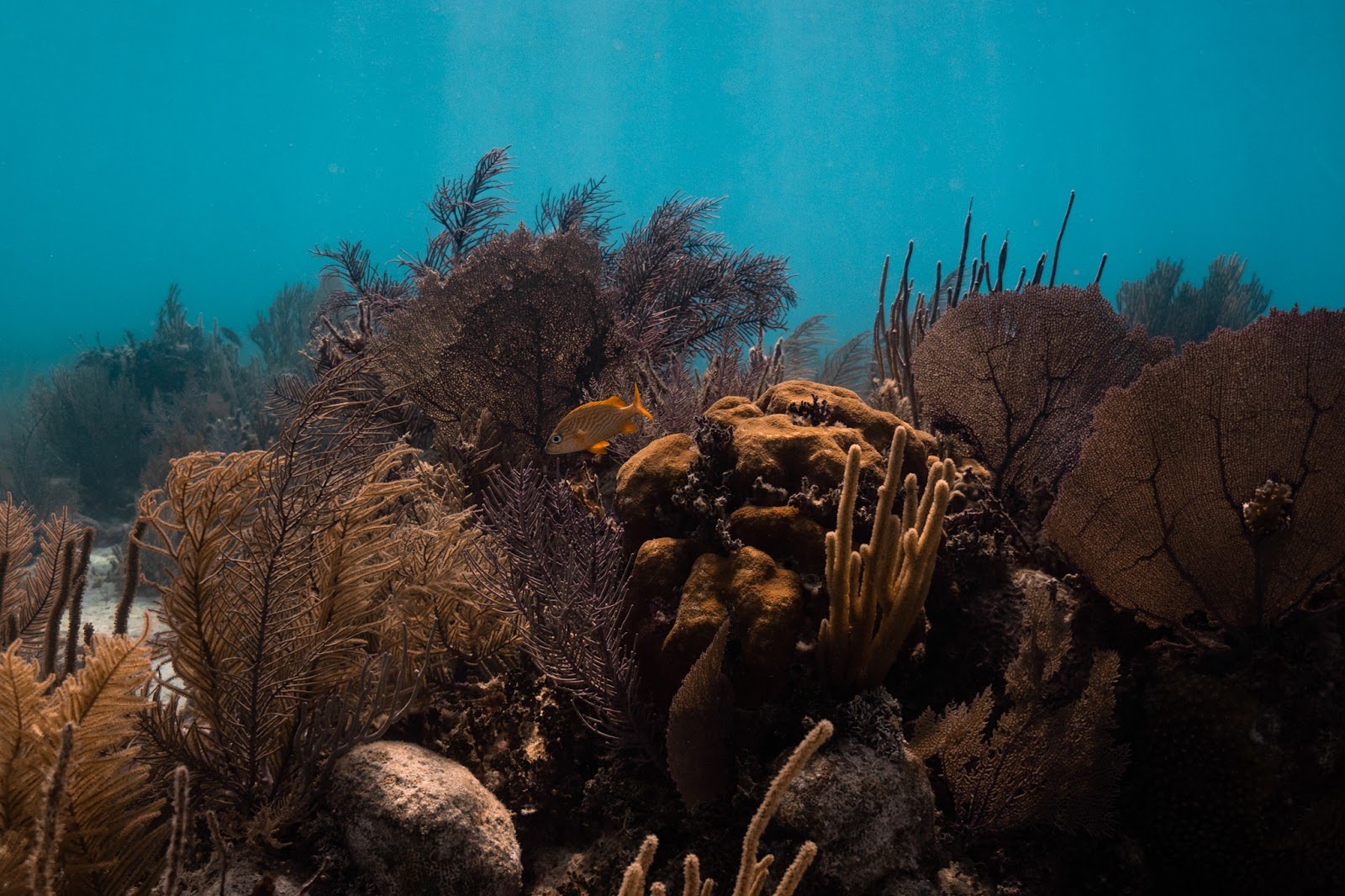
(Coral reef in Belize. Photo Credit: Marla Tomorug)
The thing is, this was done by the fisherfolk themselves. We knew what we were doing even back then. There were people out here that were catching up to 10,000 pounds of lobster, yet still catching young ones in the process. And that's what started the destruction. Some guys would have ten bags of adult lobster, but they also had five or six bags of juvenile ones too. And now, because of that, it's going to take a long time to restore the reefs back to the way I remember them—if we even can at all.
For some of the main fishing areas, the only solution is to close it down so that the fish can rebound. But how do you close these areas down when so many people in Belize rely on them? Fisherfolk and their families still need to live, survive, get by. I know a lot of fisherfolk, especially the younger ones, that get this and are trying to do the right thing. I’m also teaching a lot of the younger men about this too. They are trying their best to follow every rule.
The thing is, there’s a struggle between fisherfolk, scientists, and conservation teams. For example, the Nassau Grouper is a protected fish here and we’re only allowed to fish for them during a specific season—December 1st through March 31st. However, at Glovers Reef, there are some “no-take areas” that have huge populations of groupers. If we were allowed to fish at one of these sites, people would be better able to provide for their families. During this small season we can fish for grouper and people will have the ability to bring home 4,000-5,000 BZD which will help sustain them and their families.
Our villages would come to life in so many ways, and thousands of people would be thriving. At Glovers, the fish will grow and die, regardless of our presence. With some population guidance, we could feed families instead of letting the Nassau Grouper run its course without any of us benefiting.
But, there needs to be strict following of the rules, and that’s the problem. The few outliers who break the rules ruin it for all of us. There are people fishing and still catching juvenile animals, which everyone knows is wrong. The hardest thing to do is to try and change this behavior, but it’s the root of the problem. Even despite the fact that people know this is hurting future generations, just as much as it’s hurting themselves in the long run. I sometimes say, “this is going to punish your kids, you know that right?” But there are people who still get out there and do it.
BELIEVING IN THE NEXT GENERATION
I respect the next generation. I care about them. A lot of that has to do with my granddaughter, Tara, who I’m so proud of for the work she does on behalf of Belize’s ocean. We need to be teaching our next generation how to work hard for the things they want, to follow the rules so that they can have a healthy ocean for THEIR families. If we teach our kids how to survive, to work and make an honest dollar, we will be more set up for success.

(Lincoln’s granddaughter, Tara Scarborough. Photo Credit: Marla Tomorug)
When I started working at my first job, I received 75 cents per week. Some days, some weeks I don't even get the 75 cents, but only 50 cents. Didn’t matter, as it was still something and it helped my family. This taught me one thing very early: if you work, you will survive. This is what I like to share with kids who I work with and train so that they know contributing to society will get them far. It makes me proud to be someone who can help the community based on what I’ve seen and lived through—based on my experiences and successes. My goal is to help as many people as possible find their straight path. My nickname in the community is “Pa” which means father. I want to help this community understand how to be successful now and tomorrow.
Belizeans are really nice people, which is why our coastal tourism is so sought after. It’s not just because we have such a beautiful ocean here. It’s because of the people. We’ve got five ethnic groups of people, and we’ve seen a lot of struggle for some of these groups throughout history. The Garifuna community that is here in Hopkins, they were once called “36” because they could not live within 36 miles of Belize City due to heavy racism and slavery. My friends, the founders of this village, are from this community and I was accepted into it because I like to help. That’s why I eventually was able to get land in this village of Hopkins, even though I’m of Creole and Scottish descent and not Garifuna.
With so much change happening all around us, we need to support one another, first and foremost. We need to respect one another. If we can do that, then we have the ability to continue to build up sustainable tourism and fishing. We will have the ability to do this. We need to keep protecting our ocean areas, while finding a balance while living off the ocean. Permit and bonefish are protected, and because of that, we are seeing their populations bounce back. But we need to keep working, educating and we need to keep trying if we want to see a sustainable tomorrow.
As told to Andi Cross in May 2024.
